OpinionOpinion
Europe Reaches a Digital Finance Milestone as Cards Overtake Cash
The European Central Bank reveals that cards have become the most frequently used payment method at physical points of sale in the euro area, although consumers continue to value the freedom to choose how they pay.

Translated from the Spanish original · Translation: Patricia Parra · reviewed November 27, 2026
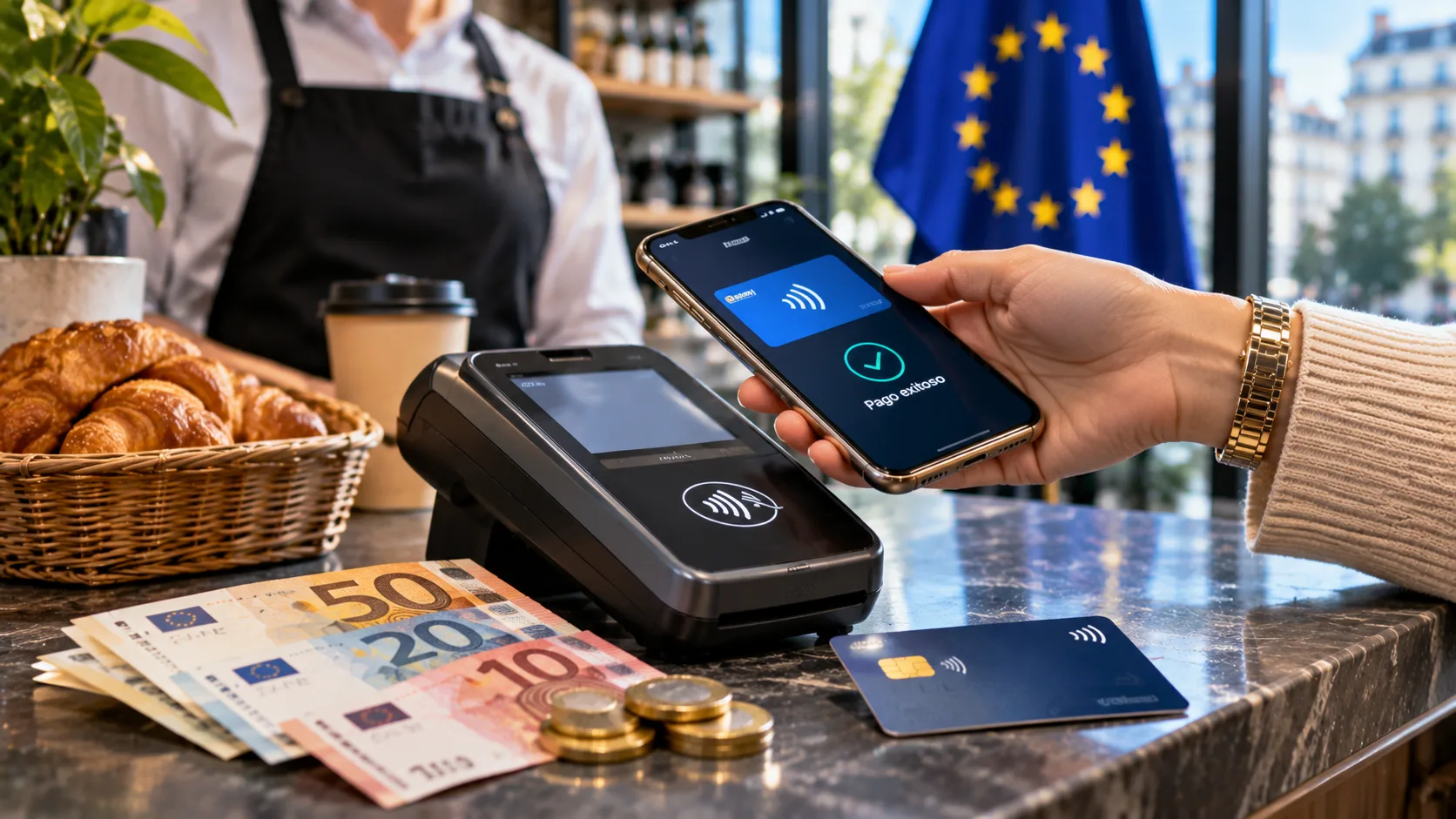
The digital transformation of the financial system is reshaping one of society's most familiar daily habits: how people pay for goods and services.
On November 25, 2026, the European Central Bank (ECB) presented the results of its SPACE 2026 study, examining consumer payment habits and preferences across the euro area.
For the first time since comparable data collection began in 2016, physical payment cards have overtaken cash in the number of transactions conducted at physical points of sale.
A Gradual Financial Transformation
Cards represented 45% of in-person transactions, while cash accounted for 44%.
Mobile payments also gained ground, increasing from 6% in 2024 to 9% in 2026.
Although the gap between cards and cash remains narrow, the shift reflects the growing integration of digital payment alternatives into everyday life.
For merchants, this evolution highlights the need to adapt payment infrastructure, improve customer experiences, and strengthen security mechanisms.
Are We Witnessing the Disappearance of Cash?
The study suggests that financial transformation does not necessarily require eliminating traditional payment methods.
While 82% of consumers consider access to digital payment options important, 62% also value retaining the ability to pay with cash.
The coexistence of different payment instruments can contribute to more accessible financial systems that are resilient to technological disruptions.
The real challenge is to expand consumer choice without creating new barriers to financial access.
What Does This Mean for Latin America?
Europe's experience provides an interesting reference point for Latin American markets, where financial digitalisation must respond to different economic, social, and technological realities.
Colombia, for example, has introduced Bre-B, a system enabling immediate payments and transfers between participating financial institutions.
This infrastructure represents an opportunity for small businesses and entrepreneurs to incorporate additional payment alternatives into their operations.
For fintech companies across Colombia, Mexico, and Latin America, the challenge will be to develop accessible, interoperable, and secure solutions without excluding people who continue to rely on cash.
Financial inclusion should not be measured exclusively by the number of digital transactions, but also by people's ability to access financial services suited to their needs.
The Future of Payments Is Also About Freedom of Choice
Technological evolution is expanding the possibilities of the financial system, but its success will depend on trust, accessibility, and user experience.
The European findings offer an important lesson: a digital economy does not necessarily have to be a cashless economy.
The future of payments may be built on the coexistence of different technologies, ensuring that individuals retain the freedom to choose how they participate in the financial system.
This article was prepared with the assistance of artificial intelligence and is pending human editorial review.
Sources
- Estudio SPACE 2026 · Banco Central Europeo · accessed November 25, 2026
- Comunicado oficial · Banco de Francia · accessed November 26, 2026
- Cinco Días — El País · Cinco Días · accessed November 25, 2026
- Banco de la República de Colombia — Bre-B · Banco de la República de Colombia · accessed November 26, 2026
- Banco de la República — Primer año de Bre-B · Banco de la República · accessed November 26, 2026
About the author
Free newsletter
Get Café con Conocimiento for free
A regular edition on what is moving the world and Latin America, explained with context, sources and a question to discuss.
Found an error? Write to info@techbridges.org and tell us which fact should be reviewed.