News
GPT-6 Opens a New Frontier for Artificial Intelligence: Protein Design
OpenAI presents research exploring GPT-6's protein design capabilities, with experimental findings that open new perspectives for biotechnology and scientific research.

Translated from the Spanish original · Translation: Patricia Parra · reviewed November 27, 2026
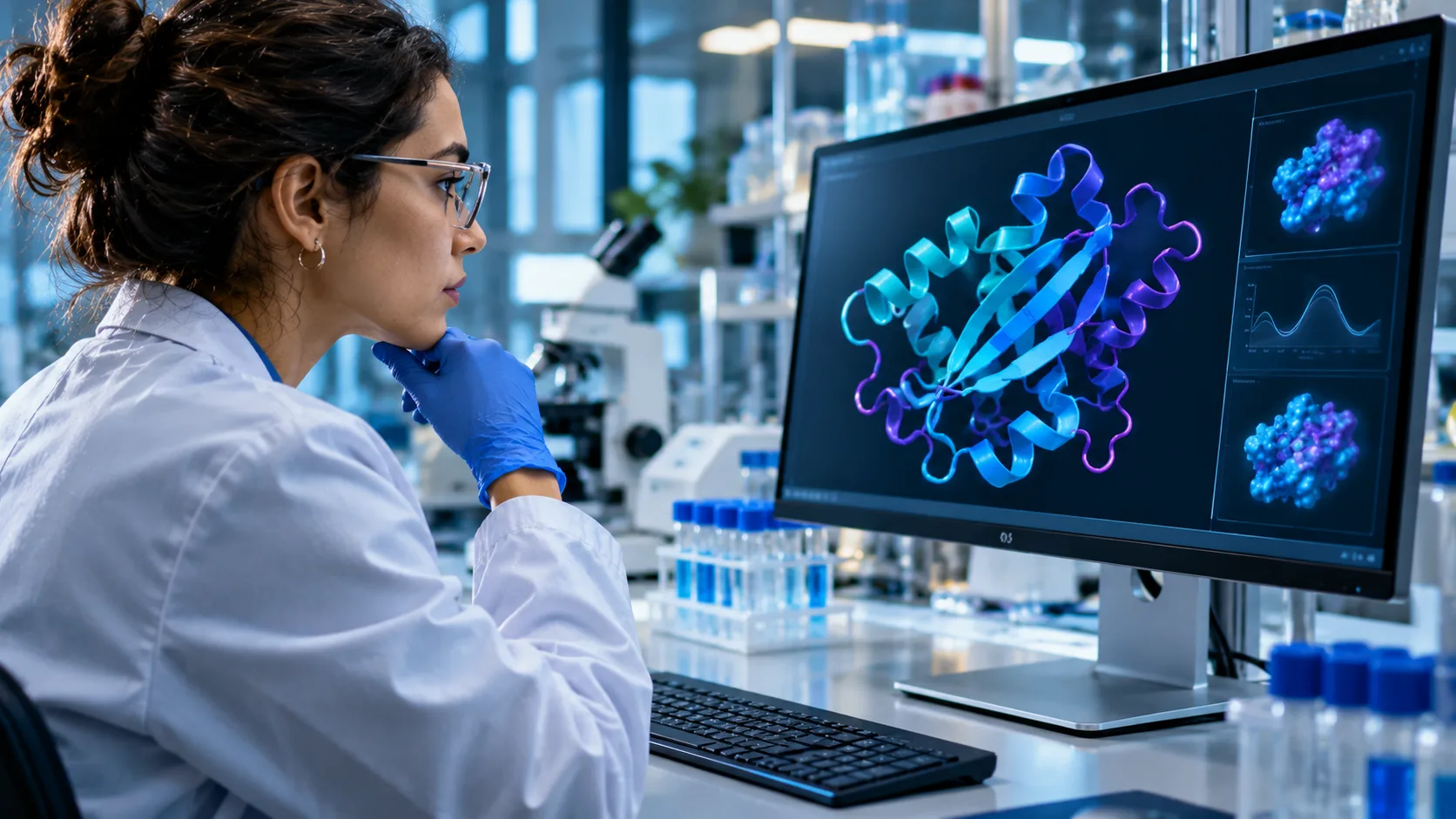
Artificial intelligence is expanding beyond text, image, and software generation. Its evolution is also beginning to transform how scientists explore biological problems and develop new solutions.
On November 24, 2026, OpenAI presented research examining the capabilities of its GPT-6 family of models in protein design, one of the most significant fields in modern biotechnology.
The findings point towards new possibilities for collaboration between researchers and general-purpose artificial intelligence systems.
Why Is Protein Design Important?
Proteins are molecules essential to life. They participate in processes such as immune system function, the transport of substances, and numerous biological reactions.
Understanding their properties and developing new proteins is a strategic area of medical, pharmaceutical, industrial, and environmental research.
Traditionally, this work has required specialised scientific knowledge, advanced computational tools, and experimental processes.
Artificial intelligence could complement these capabilities and facilitate the exploration of new scientific hypotheses.
What Did OpenAI Announce?
The company reported that certain models within the GPT-6 family can generate protein design proposals using general reasoning and programming capabilities.
The research also included physical laboratory experiments conducted with a scientific partner, providing experimental evidence for some of the capabilities examined.
However, these findings do not mean that artificial intelligence can replace researchers, independently develop medical treatments, or guarantee that a designed protein will perform all its intended functions.
The research is available as a scientific preprint, and its findings require rigorous, independent evaluation.
What Does This Mean for Latin America?
For Colombia, Mexico, and other countries across the region, the convergence of artificial intelligence and biotechnology represents an opportunity to strengthen research, innovation, and scientific entrepreneurship ecosystems.
Universities and research centres could explore new forms of interdisciplinary collaboration, connecting specialists in biology, medicine, engineering, and computer science.
Opportunities could also emerge for businesses developing scientific analysis tools, technological infrastructure, and research support solutions.
However, realising these opportunities will require investment, specialised education, infrastructure access, and appropriate governance and biosecurity frameworks.
The opportunity lies not only in adopting tools developed elsewhere but also in strengthening the region's capacity to produce its own scientific knowledge.
Artificial Intelligence as an Ally of Science
The advancement of artificial intelligence in biology presents a dual responsibility: encouraging innovation while ensuring that its applications develop under appropriate scientific, ethical, and safety standards.
Technology can expand research possibilities, but experimental validation and scientific expertise remain indispensable.
The next stage of artificial intelligence may be defined by increasingly close collaboration between computational capabilities and human knowledge.
For Latin America, actively participating in this transformation represents a strategic opportunity for scientific and technological development.
This article was prepared with the assistance of artificial intelligence and is pending human editorial review.
Sources
- OpenAI — Comunicado oficial · OpenAI · accessed November 24, 2026
- OpenAI — Investigación científica original · OpenAI · accessed November 26, 2026
- AI Early Edition — Cobertura especializada · AI Early Edition
About the author
Free newsletter
Get Café con Conocimiento for free
A regular edition on what is moving the world and Latin America, explained with context, sources and a question to discuss.
Found an error? Write to info@techbridges.org and tell us which fact should be reviewed.